

Design Thinking Workshop for KISLAP Student Entrepreneurs: AIPO Helps Teams Refine Their Core Problem
![Writer: Ateneo Intellectual Property Office [AIPO]](https://lh6.googleusercontent.com/-zssJ0cLBHzQ/AAAAAAAAAAI/AAAAAAAAAAA/AMZuucmBg9Ez3_CbeZDnTkQNyyt4gmxfAw/s96-c/photo.jpg)
On February 7, 2026 (9:00 AM – 12:00 NN), 16 student founders representing 8 startup groups from the KISLAP cohort gathered at the PLDT-CTC Bldg. Rm 513, Ateneo de Manila University, for a focused Design Thinking Workshop for KISLAP Student Entrepreneurs.
The session was facilitated by Mr Steve Chaves of the Ateneo Intellectual Property Office. The primary goal of the session was to help student entrepreneurs refine their ideas and pinpoint the main pain point they are trying to solve—a critical step in building viable and impact-driven social enterprises.
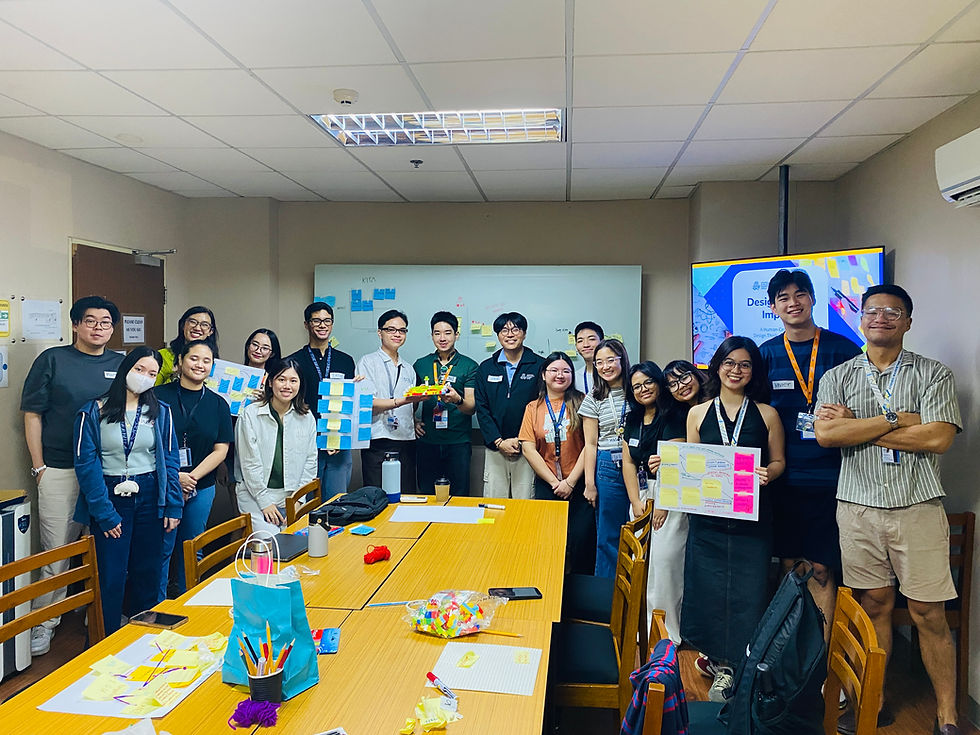
The workshop forms part of the KISLAP Social Enterprise Grant Challenge, powered by the John Gokongwei School of Management (JGSOM) and its social enterprise arm, the Ateneo Center for Social Entrepreneurship (ACSent). It supports the momentum of the program’s grand launch last 03 October 2025.
Why AIPO Supports Design Thinking for Student Founders
At AIPO, innovation does not start with a solution—it starts with a well-defined problem.
Through its programs in innovation support, commercialization, and startup incubation, AIPO equips founders with tools that strengthen both clarity and impact. In this workshop,
AIPO helped the KISLAP cohort:
Re-examine assumptions about their target users
Identify root causes behind surface-level challenges
Clarify their value proposition
Align solutions with measurable social outcomes
This approach ensures that ventures are grounded in real community needs—not just promising ideas.
Learn more about how AIPO supports innovators: 🔗 https://aipo.ateneo.edu
What Happened During the Workshop?
Over the three-hour session, the 8 teams went through structured Design Thinking exercises focused on:
1. Empathy Mapping
Founders unpacked who their users truly are, beyond demographics—exploring motivations, constraints, and lived experiences.
2. Problem Framing
Teams refined broad ideas into sharper “How Might We” statements.
3. Identifying the Core Pain Point
Participants were challenged to distinguish between:
A symptom or pain point
The actual need or root problem

This step is crucial for social enterprise development, where misdiagnosed problems can lead to ineffective solutions.
Strengthening Social Enterprise Foundations
The KISLAP Social Enterprise Grant Challenge encourages student-led ventures that generate both economic sustainability and measurable social impact.

By integrating Design Thinking methodology early in the program, the February 7 workshop ensured that:
Each of the 8 teams builds from validated insights
Solutions are humanity-centred, not assumption-driven
Founders develop stronger pitch narratives grounded in evidence
For AIPO, this is part of a larger mission: bridging innovation, entrepreneurship, and social transformation within and beyond the university.
Frequently Asked QuestionS
What is the KISLAP Social Enterprise Grant Challenge?
KISLAP is a university initiative that supports student-led social enterprises through grants, mentoring, and structured development activities. It aims to help student entrepreneurs build ventures that address real social challenges while remaining sustainable.
Why is Design Thinking important for student entrepreneurs?
Design Thinking ensures that founders deeply understand the people they are trying to serve. It reduces the risk of building solutions that do not match real needs and strengthens both venture clarity and impact.
How does AIPO support student startups?
AIPO provides innovation support services, including guidance on commercialization pathways, partnerships, intellectual property protection, and startup incubation. Early engagement helps founders make stronger strategic decisions.
Can other student groups request a Design Thinking workshop?
Yes. AIPO regularly collaborates with academic units and student initiatives to conduct innovation and entrepreneurship workshops tailored to their needs.
Let’s Build Your Innovation the Right Way
Have a startup idea, research project, or social enterprise concept you want to refine?
The Ateneo Intellectual Property Office can help you explore pathways from idea to impact—whether through design thinking facilitation, IP guidance, partnerships, or commercialization support.
Reach out anytime. Earlier conversations are easier conversations.
Visit: aipo.ateneo.edu/designthinking for more information.


mình có lần lướt đọc mấy trao đổi trên mạng شيخ روحاني thì thấy nhắc nên cũng tò mò mở ra xem thử cho biết. mình không tìm hiểu sâu chỉ xem qua trong thời gian ngắn để quan sát bố cục cách sắp xếp جلب الحبيب các mục và trình bày nội جلب الحبيب dung tổng thể. cảm giác là các phần được trình bày khá gọn, các hurentest berlin mục rõ ràng Huren Berlin nên đọc lướt cũng không bị rối với mình như vậy là đủ để nắm tin cơ bản rồi. جلب الحبيب
👍
The focus on refining core problems at the Design Thinking Workshop is crucial for student entrepreneurs. By distinguishing between symptoms and root problems, participants can develop more effective solutions. I'm curious about how AIPO measures the impact of these workshops on the participants' ventures. Do they follow up with the teams to assess progress? Photo From Emoji
It's impressive to see how the Design Thinking Workshop helped student entrepreneurs refine their ideas and focus on the actual needs of their target users. Understanding the difference between symptoms and root problems is crucial for effective social enterprise development. This approach resonates with my own experiences in building solutions that truly address community challenges. I believe resources like Clean The Golf Yard can further support entrepreneurs in clarifying their value propositions and aligning solutions with measurable outcomes.
It is inspiring to see AIPO hosting these design thinking workshops to help student entrepreneurs truly nail down their core problem statements before jumping into the solution phase. In the startup world, identifying the right challenge is often the most critical step toward long term success, and teaching these young innovators to lead with empathy and iteration is a brilliant strategy. This level of intense focus and problem solving requires a high degree of mental clarity and regular periods of decompression to maintain a creative edge. To help facilitate that kind of deep reflection and stress relief at home, many professionals are now looking into a full week sauna rental from Stoked Saunas. Their premium, handcrafted cedar saunas provide a…
The immaculate grid game is attracting players in a very impressive way; I really love the way it works and what it requires of the player. It's fantastic!