ateneo intellectual property Policy
Downloadable Copy:
TABLE OF CONTENTS
Section 2: DEFINITIONS
Section 3: GENERAL PRINCIPLES
Section 4: OBJECTIVES
Section 5: SCOPE OF THE POLICY
Section 6: OWNERSHIP
Section 7: COPYRIGHT
Section 8: PATENTS & RELATED RIGHTS
Section 9: TRADEMARK
Section 10: UNDISCLOSED INFORMATION
Section 11: IMPLEMENTATION AND PROTECTION OF INTELLECTUAL PROPERTY
Section 12: BREACHES
Section 13: EFFECTIVITY


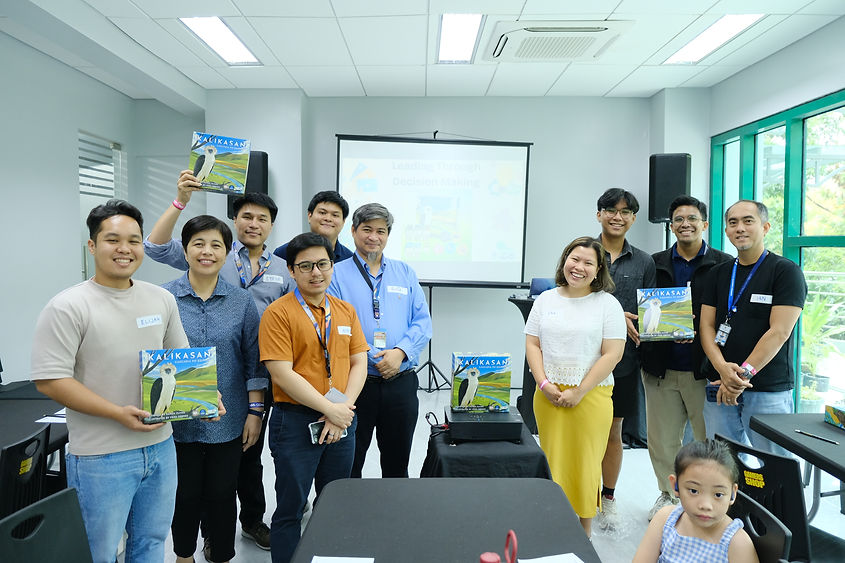
Leading through Strategic Thinking


Strategic thinking is the ability to see the bigger picture, setting long-term goals, anticipating future conditions, and making decisions today that position the organization well down the road. It involves weighing multiple possible paths, understanding how individual decisions connect to larger objectives, and balancing short-term needs against long-term positioning. Businesses need it because success rarely comes from a single good decision — it comes from a coherent set of choices that build on each other, and companies without strategic thinking tend to drift, react rather than plan, and miss opportunities competitors capture by planning ahead.
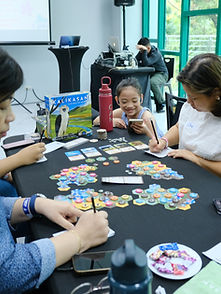
Kalikasan, a tile-and-token laying game where players build habitats for wildlife while scoring points based on how animals and terrain connect, trains this same kind of forward-looking, systems-level thinking. Players must plan several moves ahead, considering how each tile placement affects future options and scoring potential, rather than optimizing only for the immediate turn. The game also rewards recognizing patterns and synergies — placing habitats so multiple animal types can score simultaneously — much like a business strategist looks for moves that serve several objectives at once.
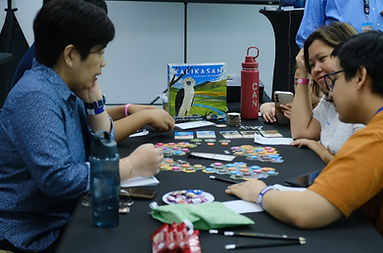
Because the board is visible to everyone and choices are limited each turn, players also practice anticipating what options will remain available later, a core skill in long-range business planning.
Play Time: 90-180 minutes
Players per Seminar: 15-20 people