ateneo intellectual property Policy
Downloadable Copy:
TABLE OF CONTENTS
Section 2: DEFINITIONS
Section 3: GENERAL PRINCIPLES
Section 4: OBJECTIVES
Section 5: SCOPE OF THE POLICY
Section 6: OWNERSHIP
Section 7: COPYRIGHT
Section 8: PATENTS & RELATED RIGHTS
Section 9: TRADEMARK
Section 10: UNDISCLOSED INFORMATION
Section 11: IMPLEMENTATION AND PROTECTION OF INTELLECTUAL PROPERTY
Section 12: BREACHES
Section 13: EFFECTIVITY


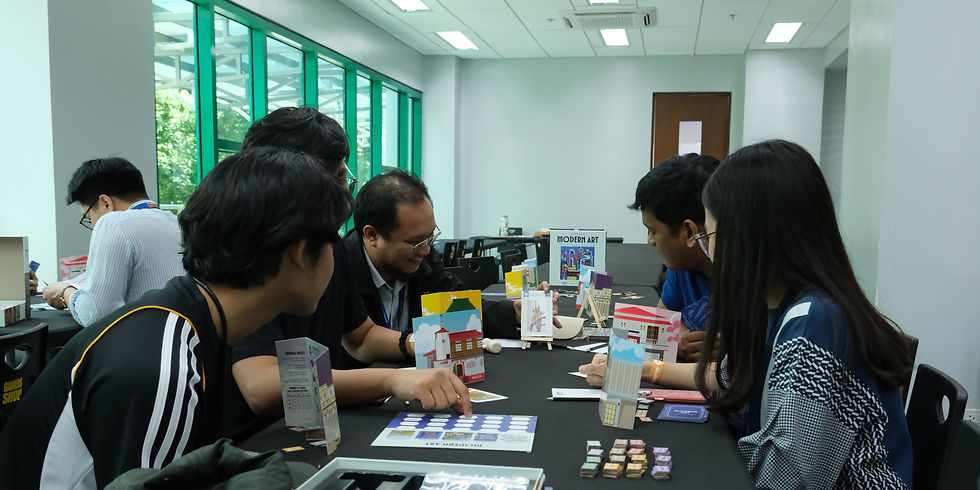
Leading through Risk Management

Risk management is the process of identifying, assessing, and responding to uncertainties that could affect an organization's goals such as financial risk, market shifts, operational failures, reputational damage, and more. It involves spotting potential risks early, weighing their likelihood and impact, and deciding whether to avoid, reduce, transfer, or accept them. Businesses need this because uncertainty is unavoidable: markets fluctuate, competitors act unpredictably, and costly surprises can derail even well-run companies. Good risk management doesn't eliminate uncertainty but rather it helps leaders make informed bets instead of blind ones.
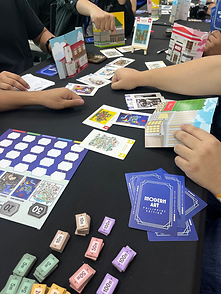
Modern Art is an auction-based game where players buy and sell paintings whose value depends on market demand. Players must judge how much an artwork is really worth before its value is confirmed, decide when to buy in or cash out, and manage a limited budget across multiple risky bids, much like managing capital across investments with uncertain returns. The game also punishes overexposure: hoarding too many paintings by one artist that never gains popularity is a lesson in diversification and knowing when to cut losses.
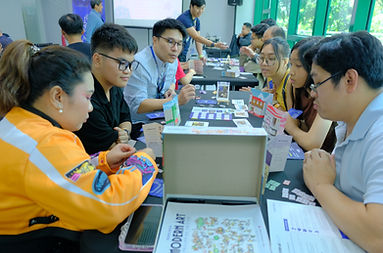
Because outcomes play out quickly and repeatedly, Modern Art trains intuitive judgment about timing, exposure, and reading market sentiment — core risk management instincts — in a fast, low-stakes setting.
Play Time: 180-240 minutes
Players per Seminar: 15-20 people